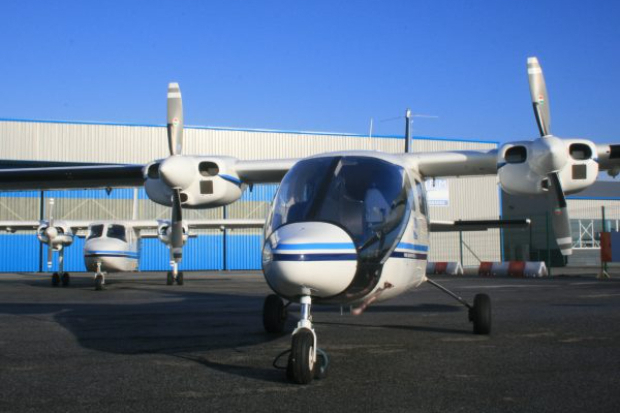
The combination of APEM’s market-leading camera systems and the use of grid-based survey patterns provides exceptionally robust data, which is favored by regulators and eases consents.
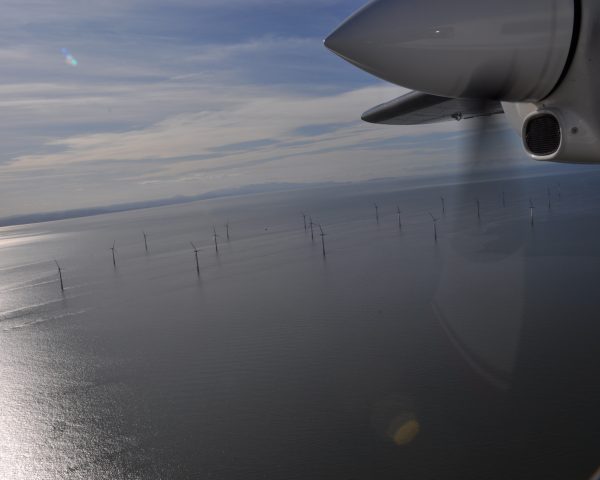
APEM has been surveying both the East and West development areas of Norfolk Vanguard, with the new contract extending surveys being carried out over the 642 km2 Norfolk Vanguard West site.
These are amongst the first surveys to employ APEM’s newly developed Shearwater II camera system, the most advanced ultra-high-resolution stills system in use for offshore windfarm surveys.
The state-of-the-art system delivers exceptionally high-quality data, gathering very high-resolution images even from heights well above 2000 feet. Uniquely, this allows well over 95 percent of birds to be identified to species. It also provides precise bird flight heights that satisfy the requirements of statutory agencies.
By using a grid-based survey pattern rather than straight-line transects the surveys gather more detailed estimates of bird and marine mammal populations, delivering a more robust EIA.
Vattenfall’s environment manager, Kathy Wood, said:
Vattenfall’s assessment of the environment impact of Norfolk Vanguard requires a good understanding of the birds and sea mammals in the development area. APEM’s cutting edge techniques give us confidence that we will achieve that.
Mark Rehfisch, APEM’s head of ornithology said:
Our new camera system and grid-based surveys not only gather powerful data but also offer cost savings for developers by reducing the time it takes to carry out surveys.
The statistical power of grid-based surveys guarantees that when a development is found to have no wildlife impact as part of BACI post-consent monitoring, this lack of impact is real.
When it comes to potential impacts on birds and marine mammals, EIAs currently use assessments that are often overly cautious. The lessons learned from APEM’s grid surveys will provide the facts that help to make obtaining consent and post-consent monitoring easier.
Norfolk Vanguard comprises two sites, East and West. Once constructed, it will provide a generating capacity of up to 1800 MW, capable of producing enough low carbon electricity to meet the equivalent electricity demand of more than 1.3 million UK households.
Data collected so far show a similar range of bird species to those recorded in the eastern part of Norfolk Vanguard, including auks, gannets, kittiwakes, and fulmars in the main.